Readiness & Risk Platform
Building the foundation of a 20,000-user, multi-role Marine Corps enterprise platform.
Building the foundation of a 20,000-user, multi-role Marine Corps enterprise platform.
This enterprise SaaS supported large-scale operational readiness across distributed military teams, but fragmented tools, inconsistent workflows, and dense data made status and action difficult to understand. Initially brought in to modernize its interface, I identified structural problems that required a broader redesign of its workflows, navigation, and shared components.
DISCOVERY
The original platform lacked the structure needed to support 13 distinct user roles. Fragmented information and inconsistent navigation made routine tasks difficult and important data hard to find.
The original interface had little visual hierarchy, with navigation, controls, and data scattered across the screen. Without a cohesive design system, the platform was difficult to use, maintain, and expand.
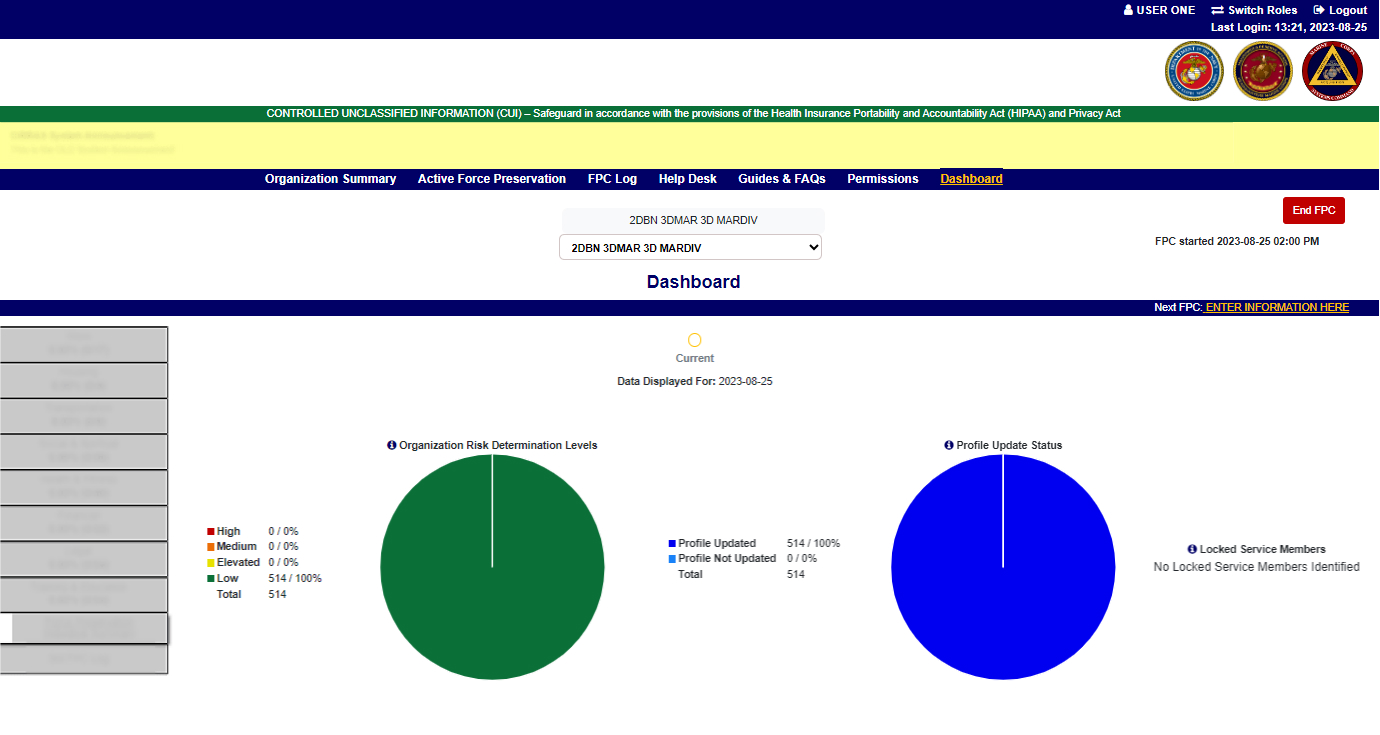
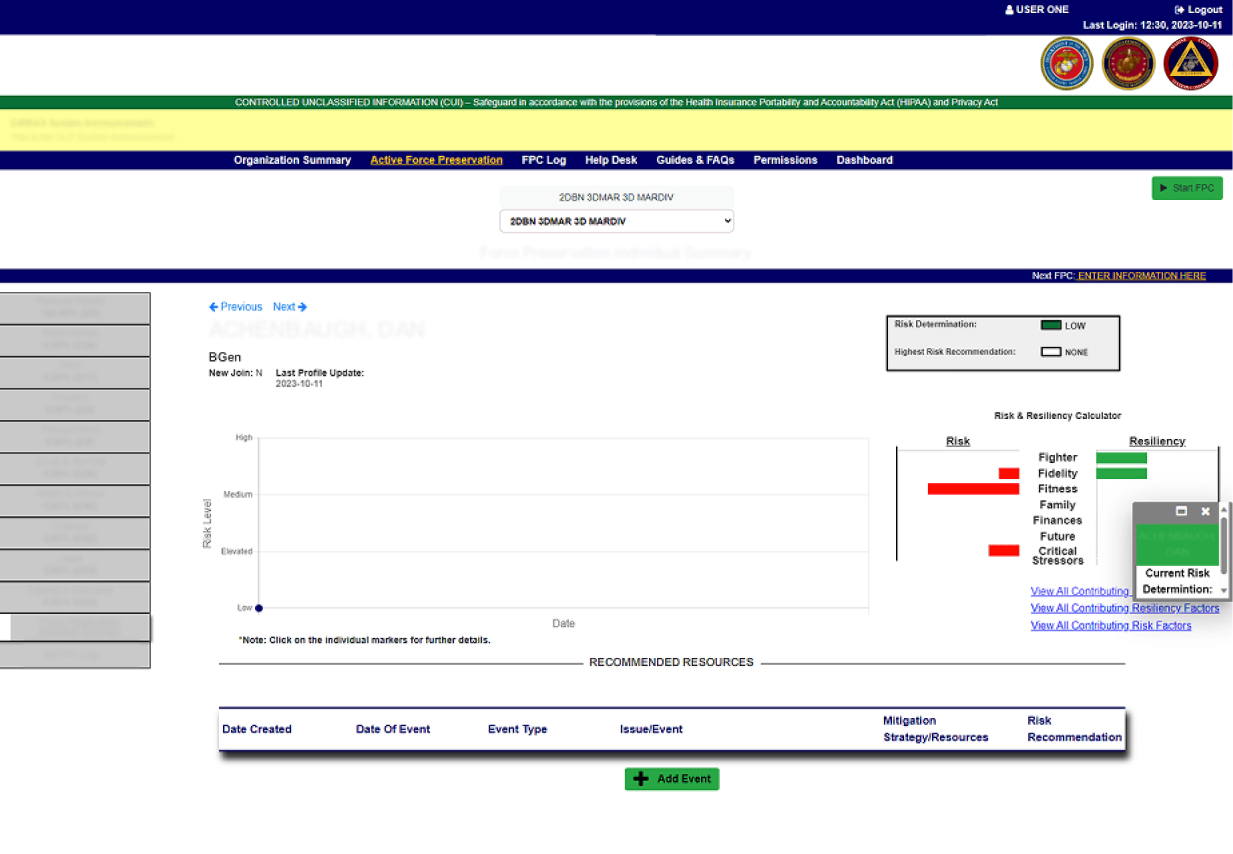
Original product interface
Restructure the platform around responsibilities, organizing case management, assessments, and resources into predictable workflows. Rebuild the foundation with a modern interface and a scalable JS/TS system constructed for future growth.
PLANNING
Following a full audit of the operator demographic and platform data, the system was redefined across two core subjects, “operators”, who interact with the platform, and “subjects”, representing service members and their associated metrics. This established a clear structure for data association, permissions, and variable navigation patterns.
A hierarchical model was developed to mirror Marine Corps command relationships. Each role was associated with defined responsibilities and access permissions, allowing the interface to present information appropriate to the user.

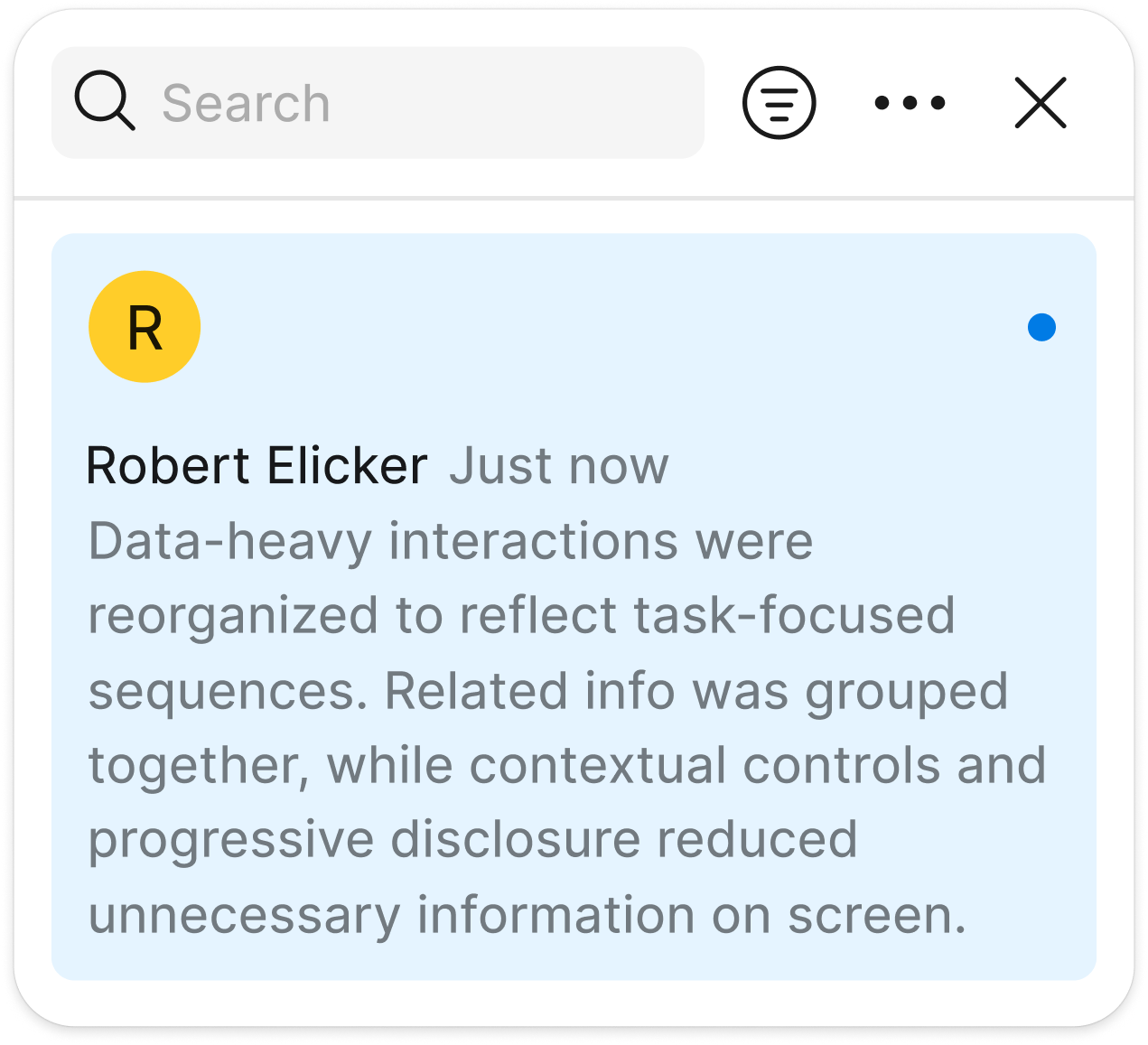
Data-heavy interactions were reorganized to reflect task-focused sequences. Related info was grouped together, while contextual controls and progressive disclosure reduced unnecessary information on screen.


IMPLEMENTATION
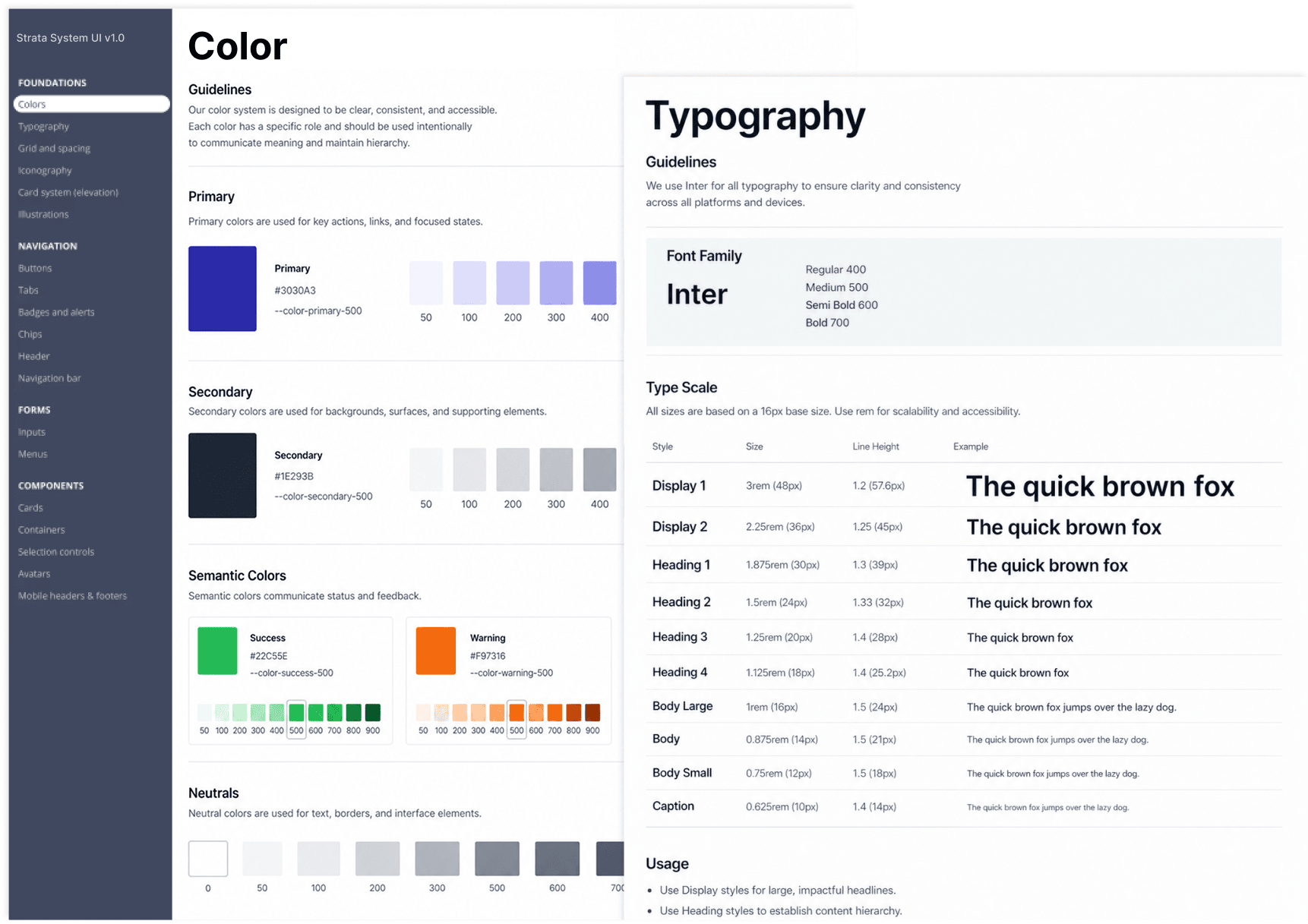
A reusable Figma design system aligned with Angular and PrimeNG, using semantic tokens and component variants was developed. Remaining involved through development and design QA, I refined components based on implementation findings and user feedback.

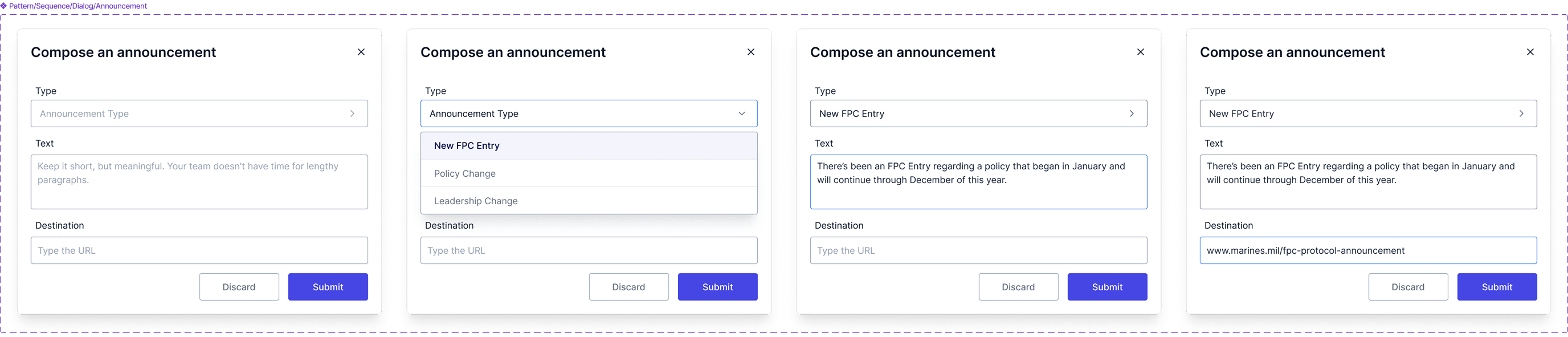
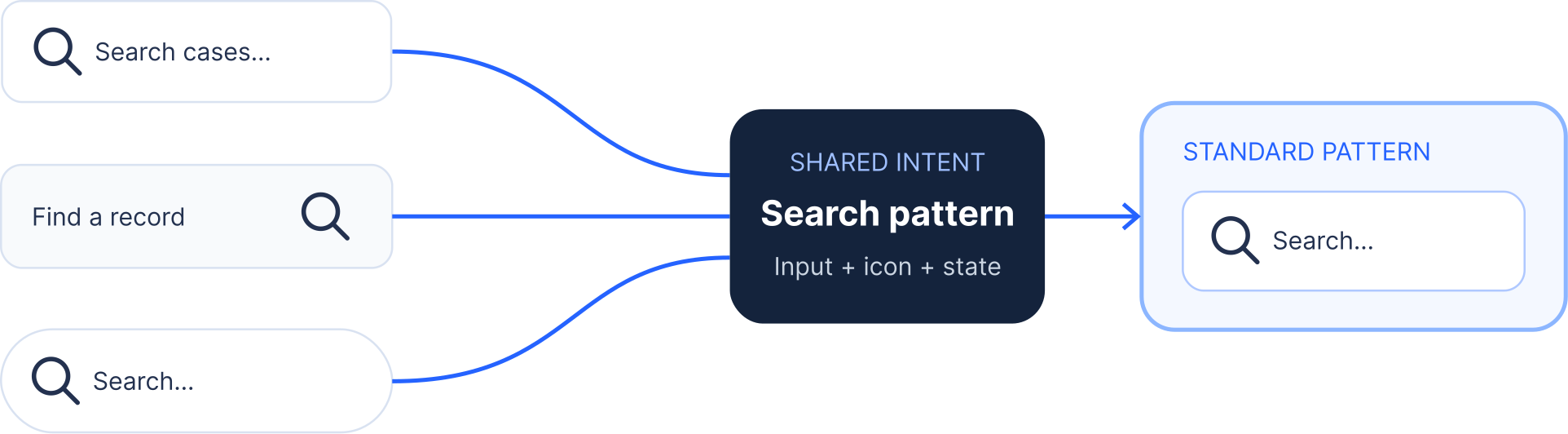
The token-driven design system unified components, variables, and interaction patterns in Figma, giving designers and engineers a shared foundation, improving consistency, reduced confusion, and streamlined development.
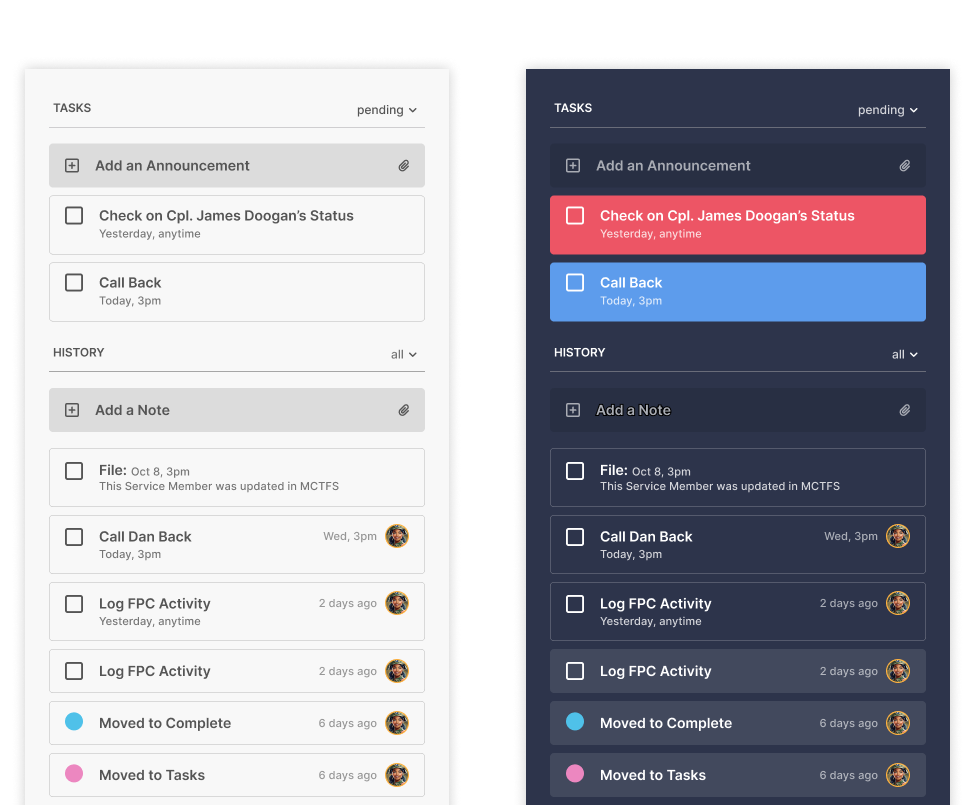
The redesign preserved familiar elements of the original interface to minimize retraining while introducing modern components, strong visual credibility, and clearer interactions to reduce cognitive load.
Bridged design and development through system-aligned architecture
Shared components replaced one-off interface designs
Enabled faster builds through reusable components and shared logic
Aligned front-end development with scalable design system principles
OUTCOME
The library became a shared resource for the design team. Published components could be updated across dependent files, while configurable properties allowed new interfaces to follow established patterns.
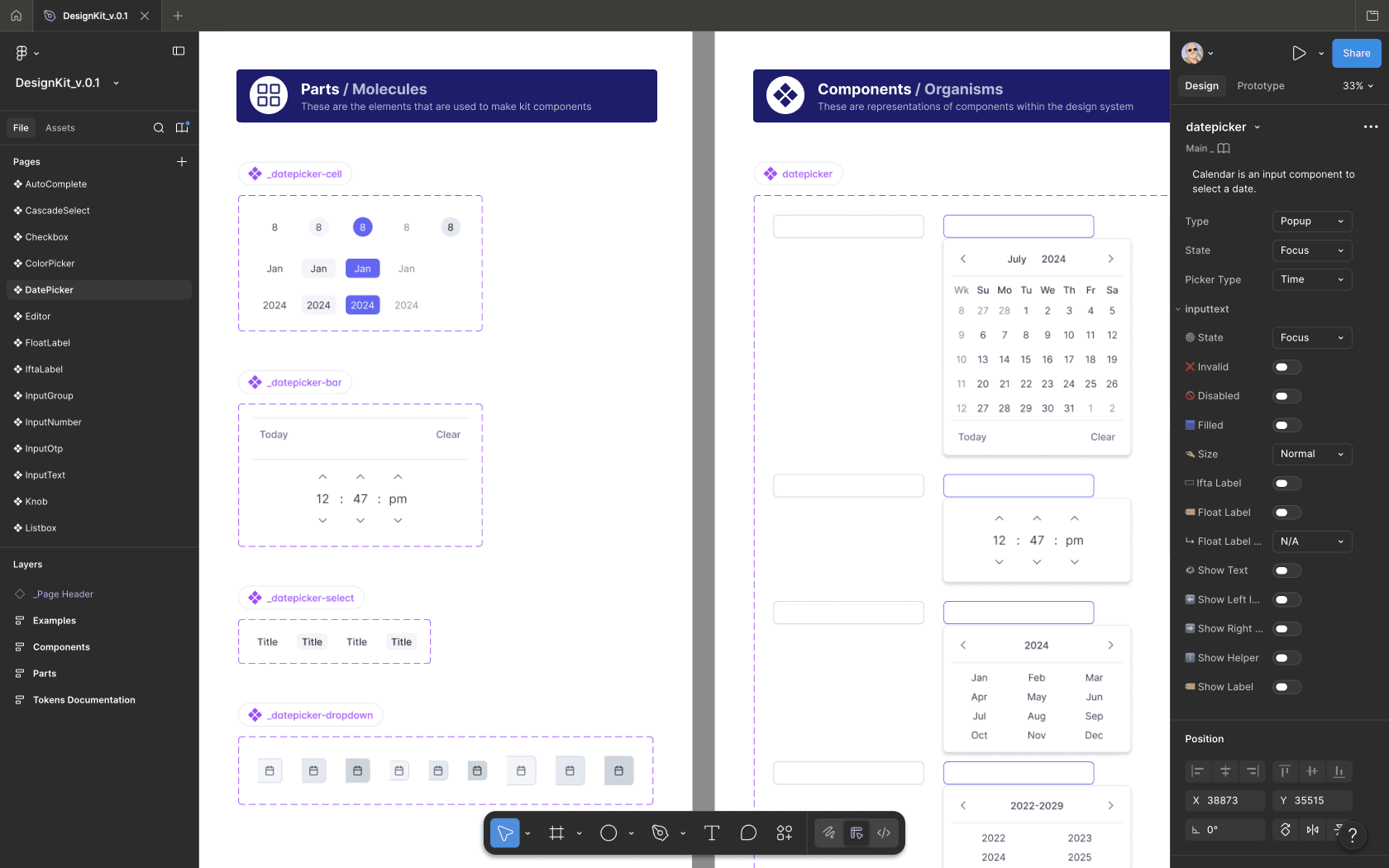
Figma Design Kit
Users can operate across multiple roles, each with distinct permissions. The system dynamically adapts visibility based on permissions context, allowing seamless role-switching without breaking workflow continuity.

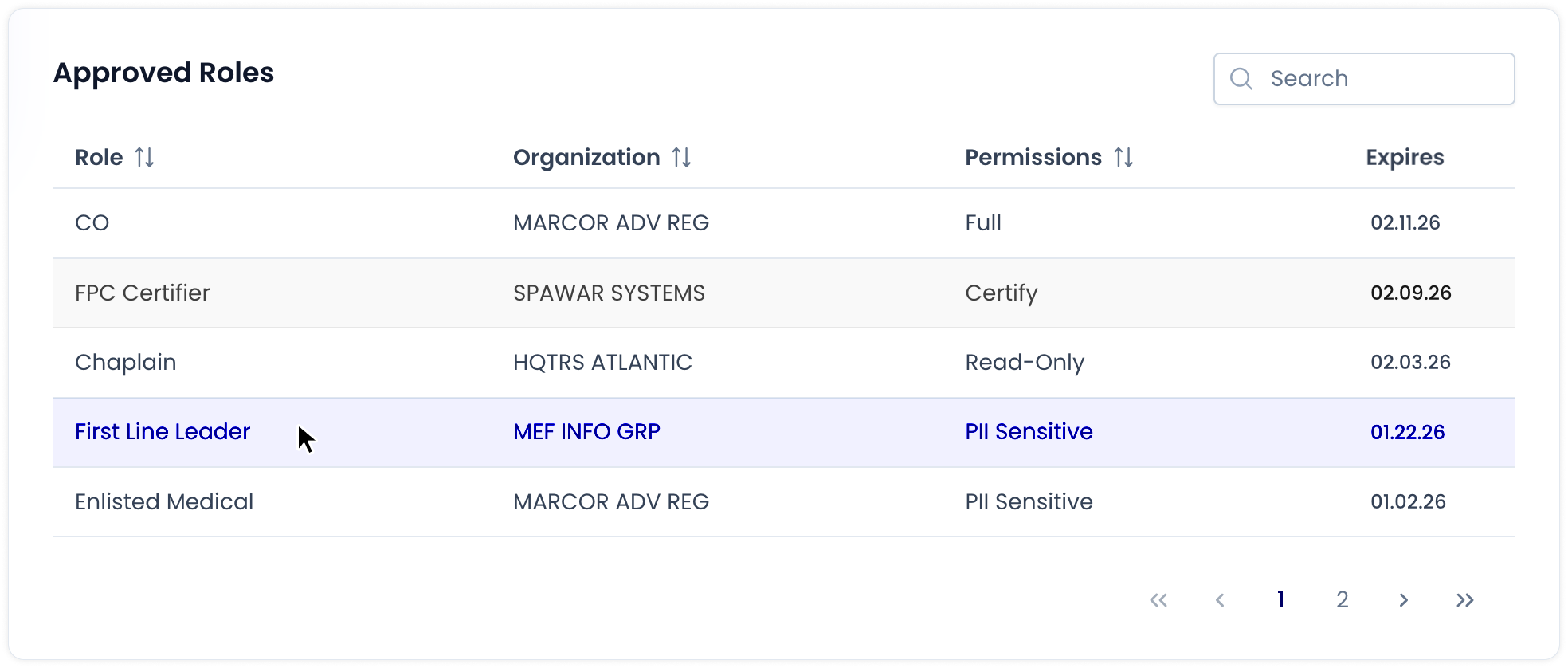
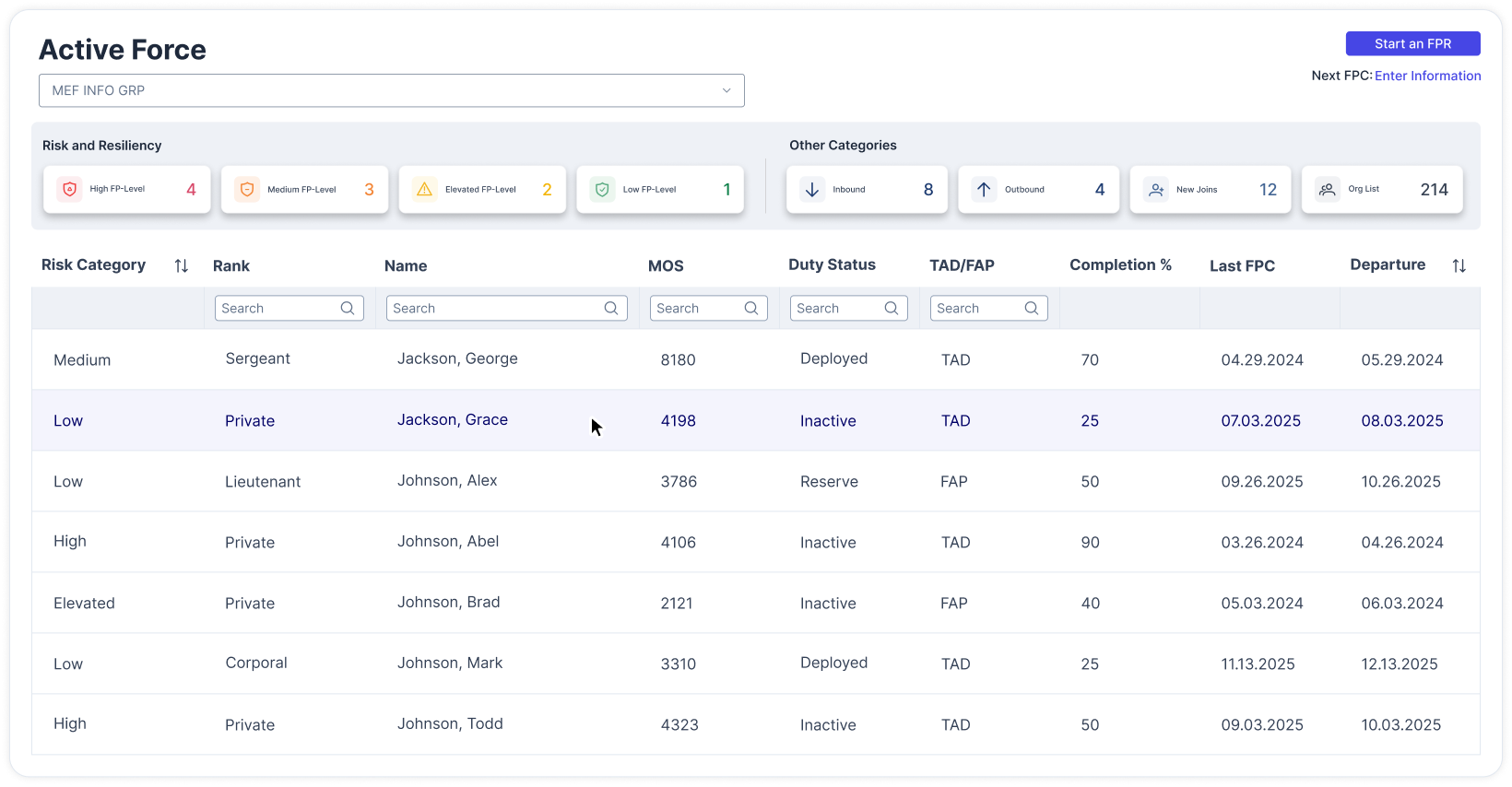
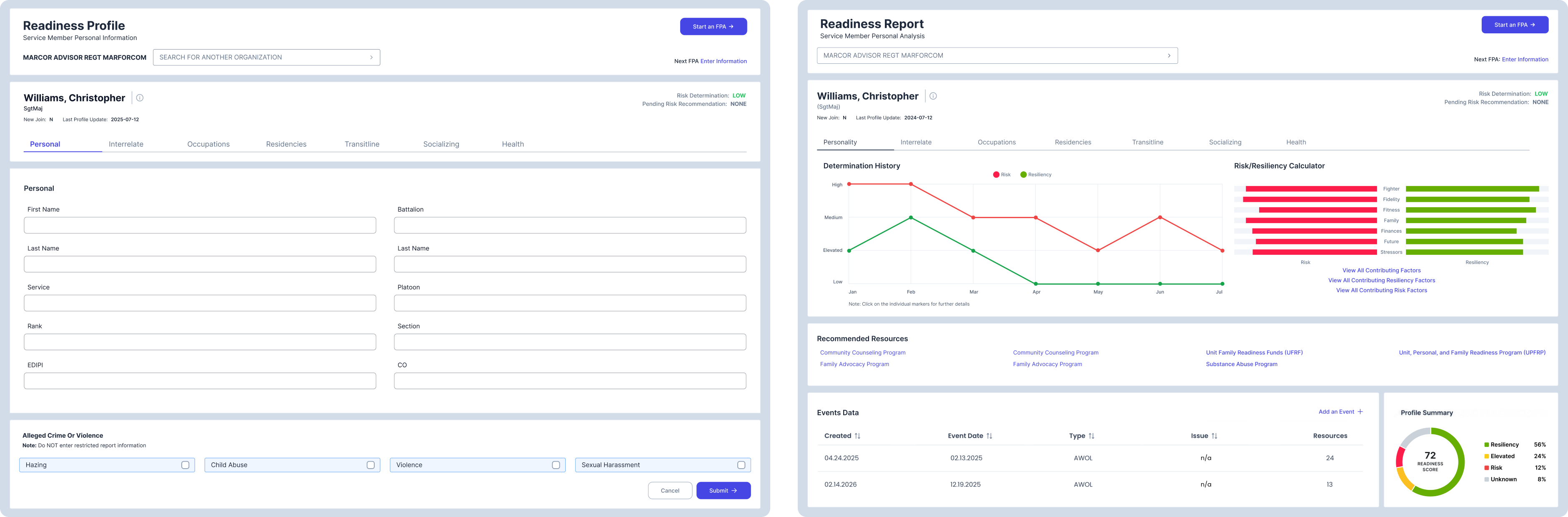
Certain users with high-level permissions were given access to secure information about service members, while some users with a lower-level determination were not.
Access was defined by the type of security needed to complete the tasks their job required.
Design
Reusable components make content easy to design, prototype, and build.
Process
Shared patterns and standards reduced repeated design decisions.
Governance
Centralized variables and components supported consistent updates
Production
Implementation-aligned specifications supported ongoing development.
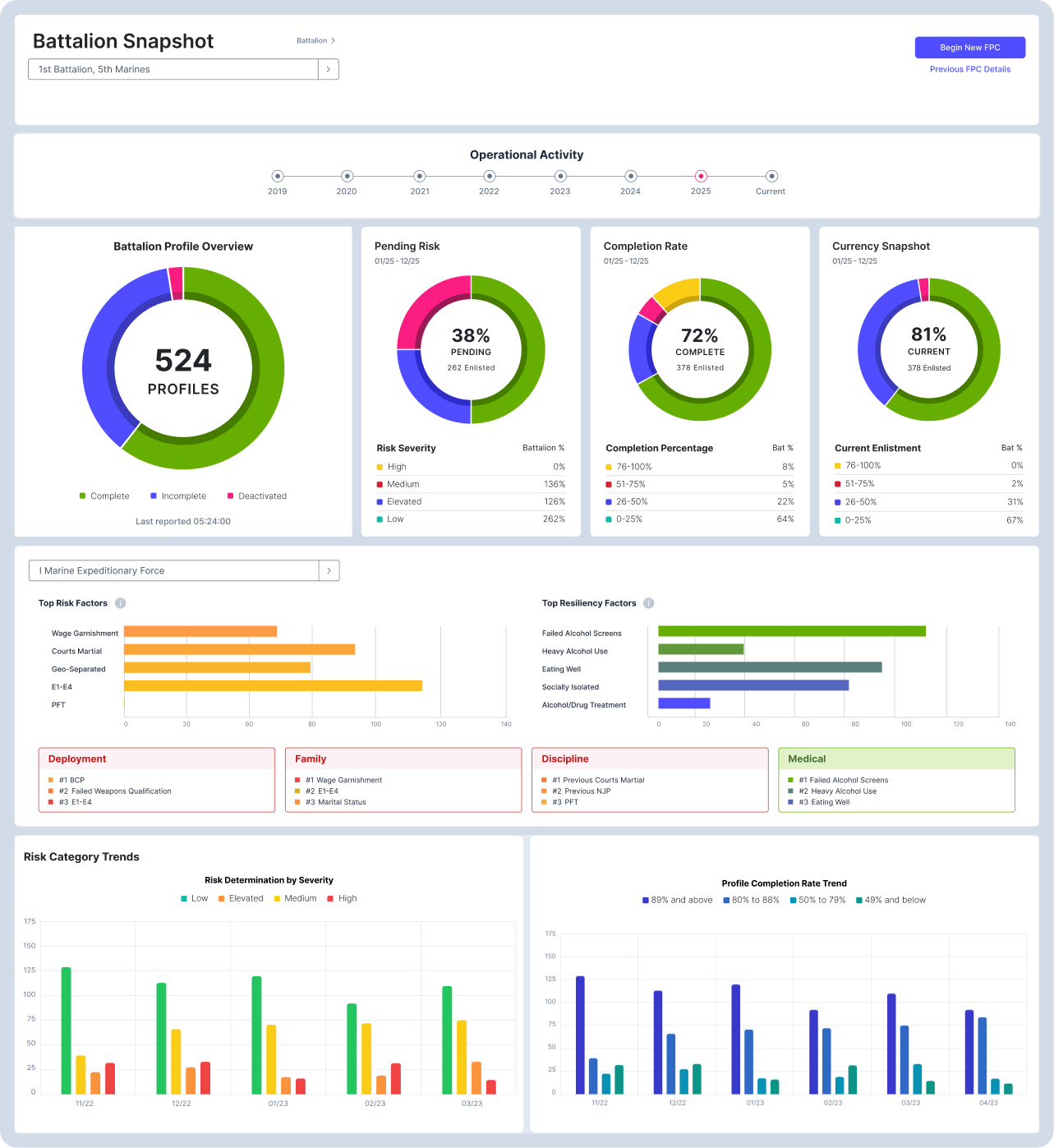
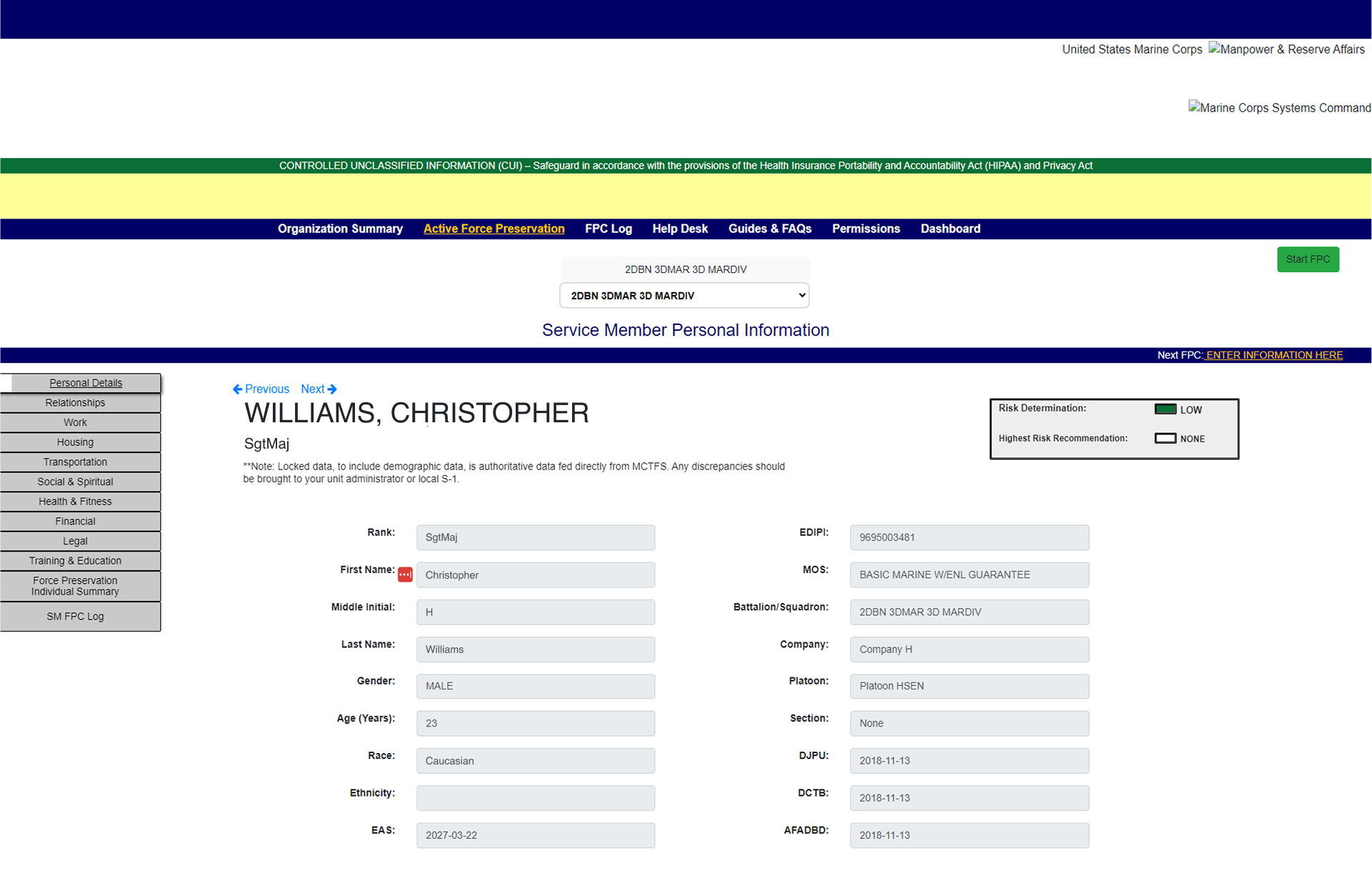
Initial
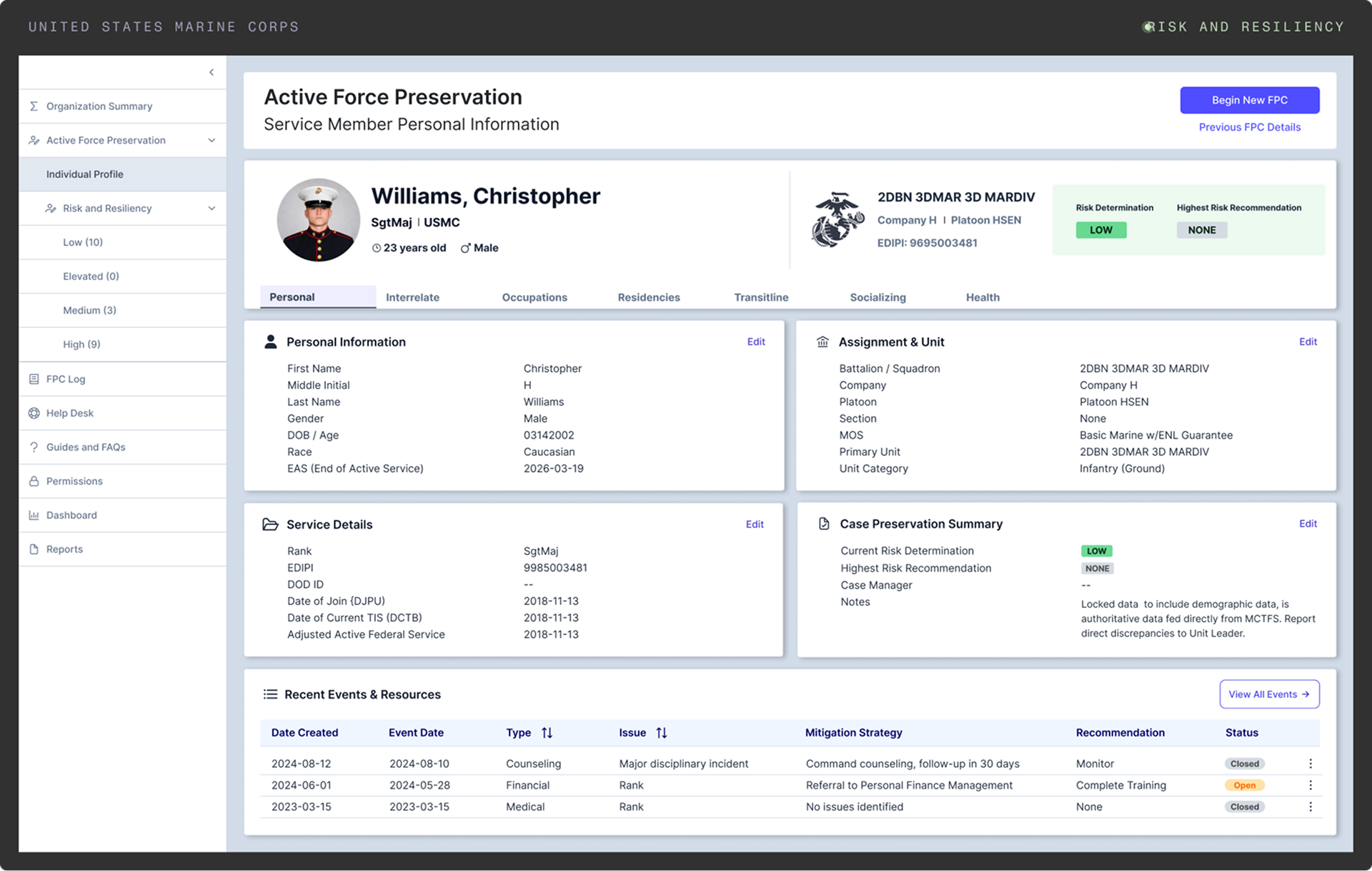
Redux
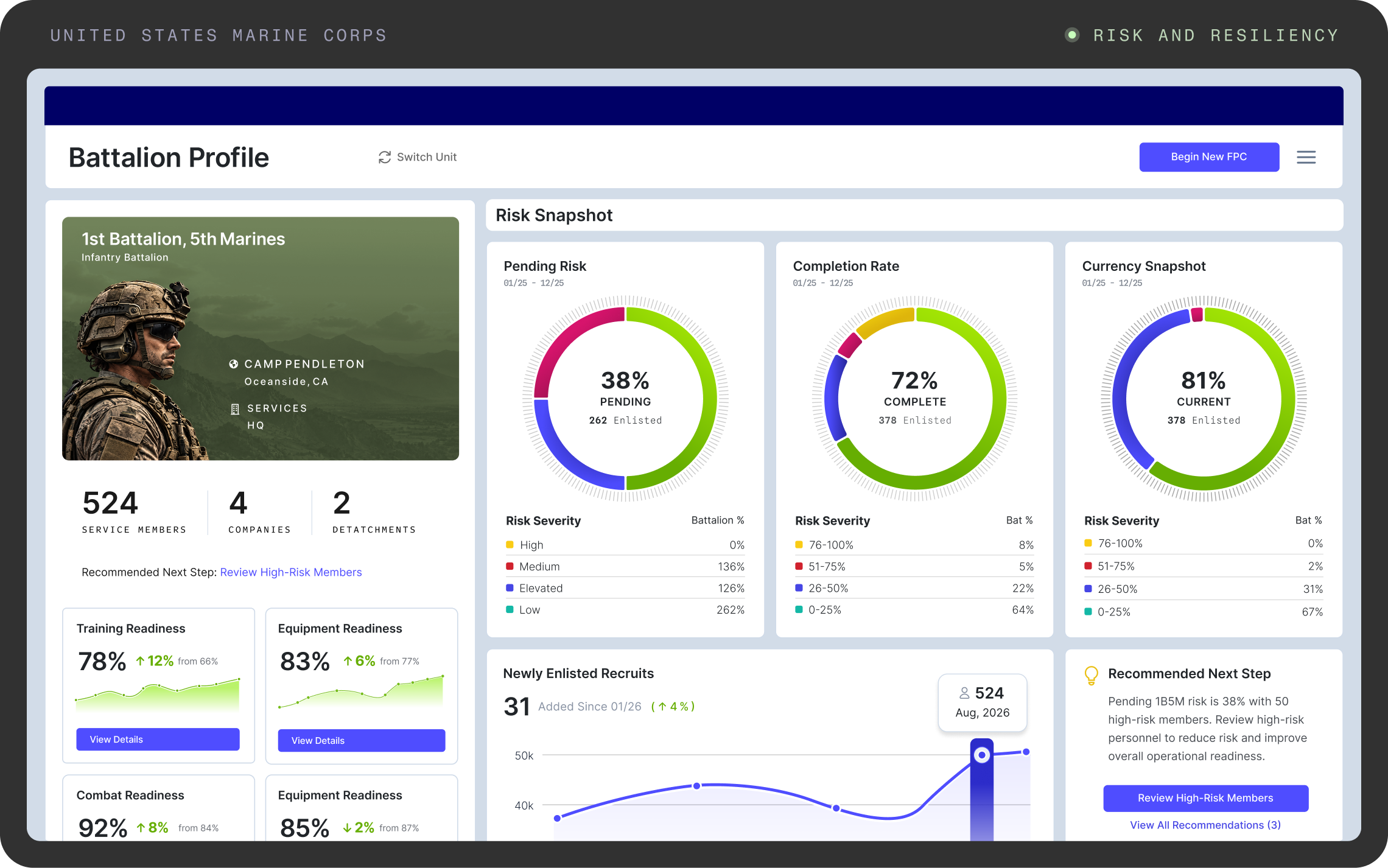
Beyond the interface itself, my involvement influenced the product’s visual direction, the design process, and the way the team worked together. Particularly in these three areas:
RETRO
What began as a visual modernization became a fundamental redesign of the product’s architecture and interface system. The resulting foundation supported approximately 20,000 active users across 13 distinct roles and contributed to a $10M follow-on contract for a related product built on the same foundation. More importantly, the work established a design system that other designers and engineers could continue using as the product evolved.
20,000 users / 13 roles:
Scope of the entire enterprise application
Shared design system:
Adopted by the design team and aligned with engineering
$10M follow-on award:
Business outcome to which this transformation contributed